
Guide · Violin labels
“Stradivarius” in your violin – genuine or copy?
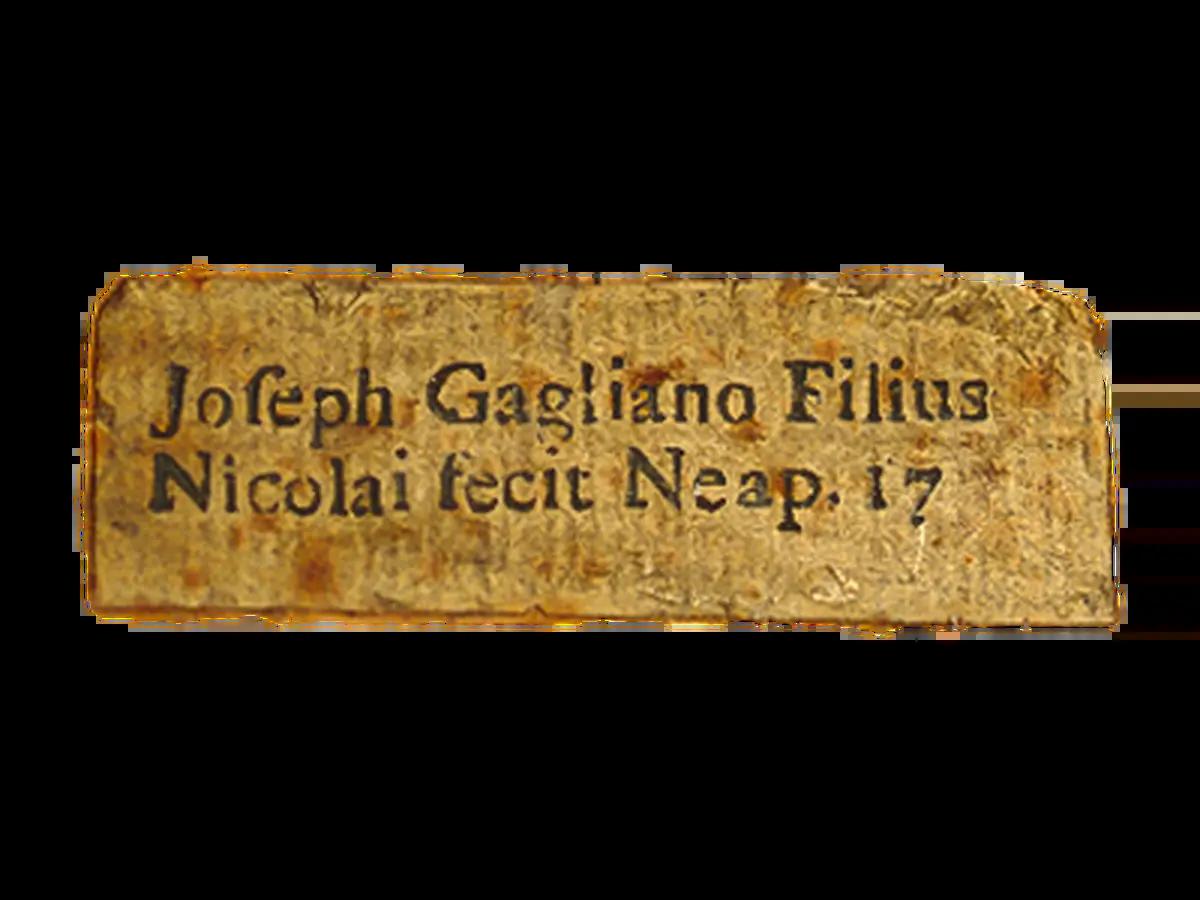
Anyone who looks through the f-hole and reads “Antonius Stradivarius Cremonensis Faciebat Anno 17…” hopes for a treasure. Here I explain what lies behind such labels and how you can proceed.
What the label means
The label is glued inside onto the back and can be seen through the left f-hole. It names a maker, a place and often a year. On the vast majority of violins bearing the names Stradivari, Guarneri, Amati or Stainer, however, the label only states the model on which the violin was based.
From the 19th century onwards, a great many such instruments were made, above all in the Saxon Vogtland, in Bohemia and in Mirecourt in France, and a large share of them were given a label with a famous name.
How to recognise a later copy
Additions such as “Made in Germany”, “Made in Czechoslovakia” or “Copy of” are a clear clue. Statements of origin in English are found above all on instruments built for export from the late 19th century onwards, and Czechoslovakia only existed from 1918.
Conversely, an old, yellowed label proves nothing: labels have always been swapped, imitated or glued in later.
What really counts
Whether a violin is old and good is shown not by the label but by the instrument itself: its construction, wood, varnish, scroll, f-holes and the traces of time. This can only be judged with experience and by comparison with many other instruments.
A copy is not worthless, by the way. Among the violins from Saxony, Bohemia and Mirecourt there are well-made instruments that are still happily played today.
What you can do now
Do not remove the label and do not open the instrument. If you would like to know where your violin comes from, my identification service can help you on the basis of photos. If you would like to sell it, send me photos and your asking price using the form below.
How to photograph the label
- Hold the violin so that light falls through the left f-hole
- Shine a second lamp or phone torch in at an angle
- Photograph without flash – it reflects
- Take several shots and use the sharpest
- Also photograph the top, back, one side and the scroll
One request in advance
Please tell me your asking price
When you offer me an instrument or bow for sale, please state the price you have in mind. It can of course serve as a basis for negotiation.
A purchase enquiry is free of charge but does not include a valuation. If you would first like to learn more about the origin and possible classification of your instrument, please use my identification service.
Have an instrument identifiedFrequently asked questions
Can a violin with a Stradivari label be genuine?
In theory yes, in practice almost never. The surviving instruments by Antonio Stradivari are known and documented.
My violin has no label at all. Is it worthless then?
No. Many good instruments no longer have a label, or it was removed at some point. What matters is the instrument itself.
Who can tell me what my violin is?
Recognised experts confirm this bindingly with a certificate. You can get an initial classification based on photos through my identification service.
Do you also buy violins with a Stradivari label?
Yes, if the instrument is good. The label plays no role in that.
More about selling
I look forward to your offer.
The easiest way is to send me photos and your asking price via the form or via WhatsApp. You can also write to me at info@pateraviolins.de or simply call: 0173 9026166.