
About this instrument
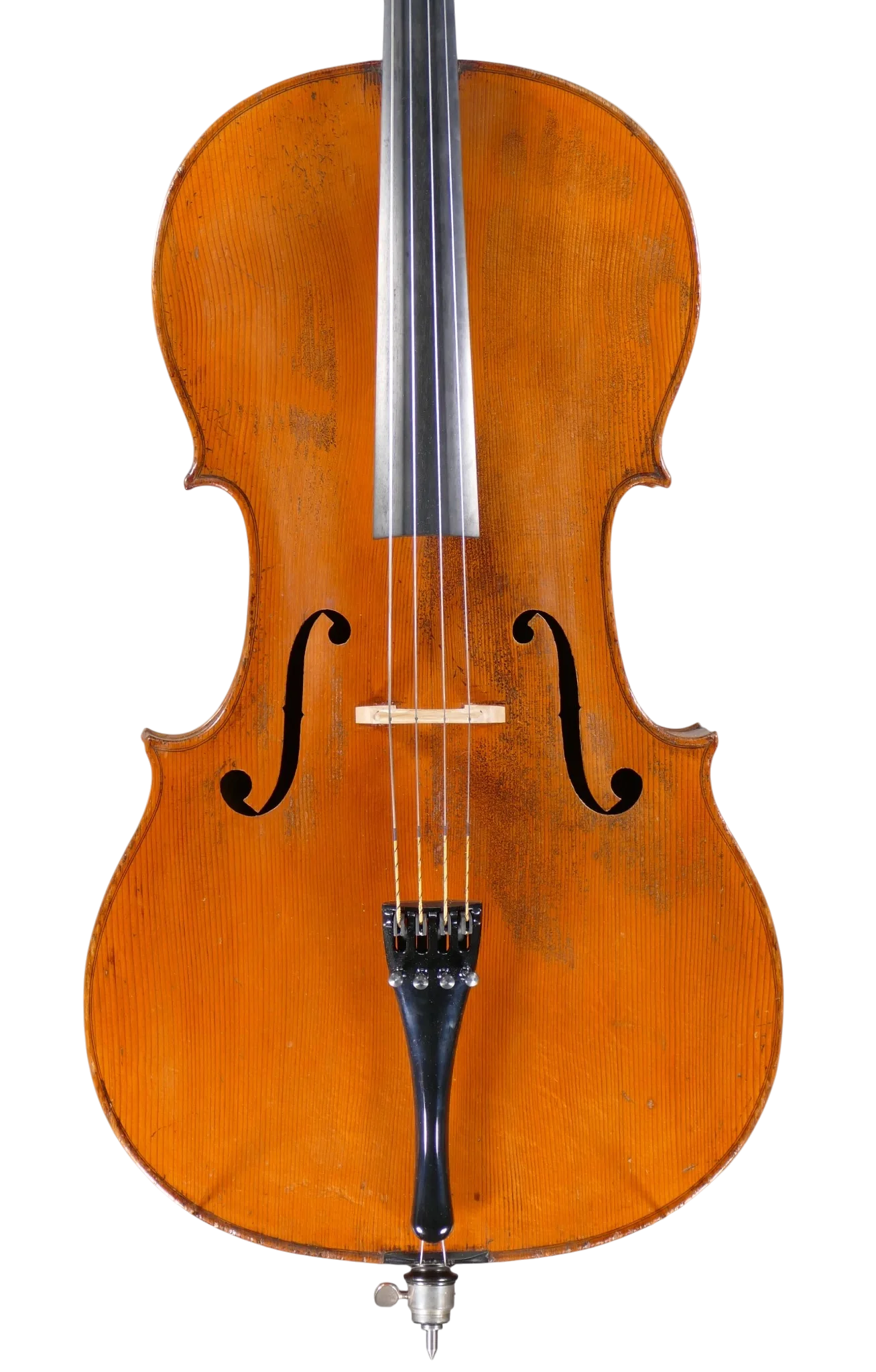
Two hundred years, and the edges are still as fresh as if the plane had left them yesterday. This French cello was made in Mirecourt around 1820 and is a particularly beautiful example of early 19th-century French instrument making – with a very good, powerful sound and absolutely top condition for its age. Mirecourt already looked back on centuries of tradition at the time: violin makers are documented there from the early 17th century, and in 1732 the craft received its own guild regulations. Around 1820 the French school was on the move; Mirecourt masters studied Italian and German models, gained experience in Paris and brought their knowledge back home, and alongside the individual workshop came larger workshops with a division of labour, long before the actual manufactories became important. Instruments from this early phase therefore often combine traditional handwork with the clear, functional design for which Mirecourt later became famous.
The model is generous and harmoniously proportioned: softly rounded upper bouts, open C-bouts and a broad, powerfully flowing lower bout create a balanced, stately silhouette, and the corners are clear and elegant without being mannered. Unmistakable are the long, upright f-holes with their wide-open lower eyes, which give the top an expressive face. The spruce top is evenly and mostly finely grown, and its fine darker traces and natural patina give it historic character. The two-piece maple back carries a fine, regular horizontal flame that comes alive especially in the lower section, and the ribs are beautifully flamed too. A transparent varnish ranging from light gold through warm amber to a subtle orange-brown brings out the structure of the wood wonderfully, and the clearly cut, balanced scroll follows the same straightforward hand. Edges, purfling, corners and contours are unusually fresh, and the back and ribs show hardly any signs of age or use – a state of preservation that is, without exaggeration, exceptional.
In sound it is very good, powerful and carrying, with plenty of substance and enough volume to unfold clearly in the room. Rich overtones give the tone brilliance, colour and liveliness without making it hard; it has a firm core and combines power with a lovely openness. Especially appealing is the combination of the direct response of a good French cello and the tonal maturity of a two-hundred-year-old instrument – grown-up, present and rich in overtones, for solo playing as well as chamber music and orchestra. An exceptionally well-preserved historic cello from Mirecourt, powerful and colourful in sound and of great elegance. This cello has since found a new home – if you are looking for something similar, you are warmly invited to visit me in Hildesheim.